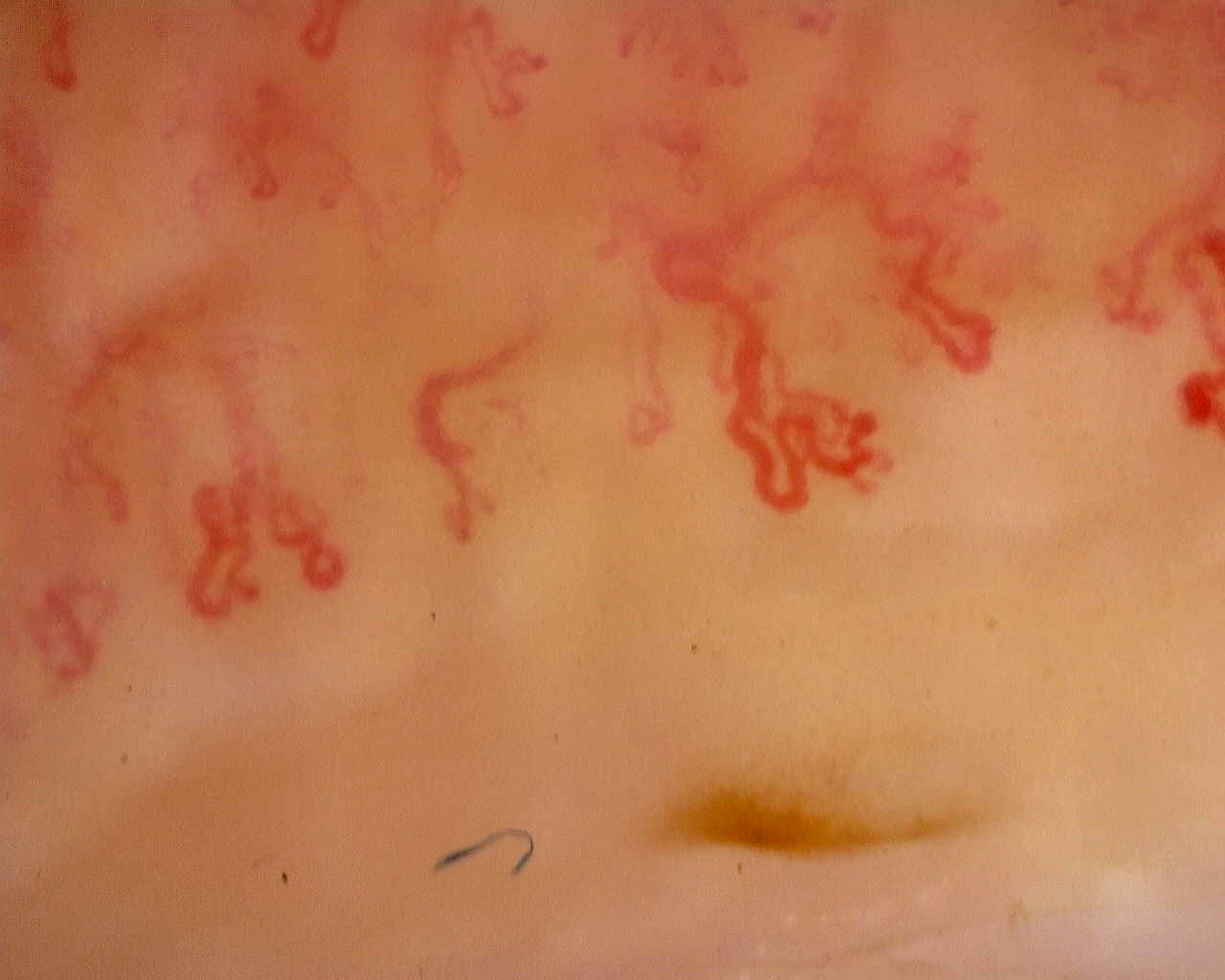
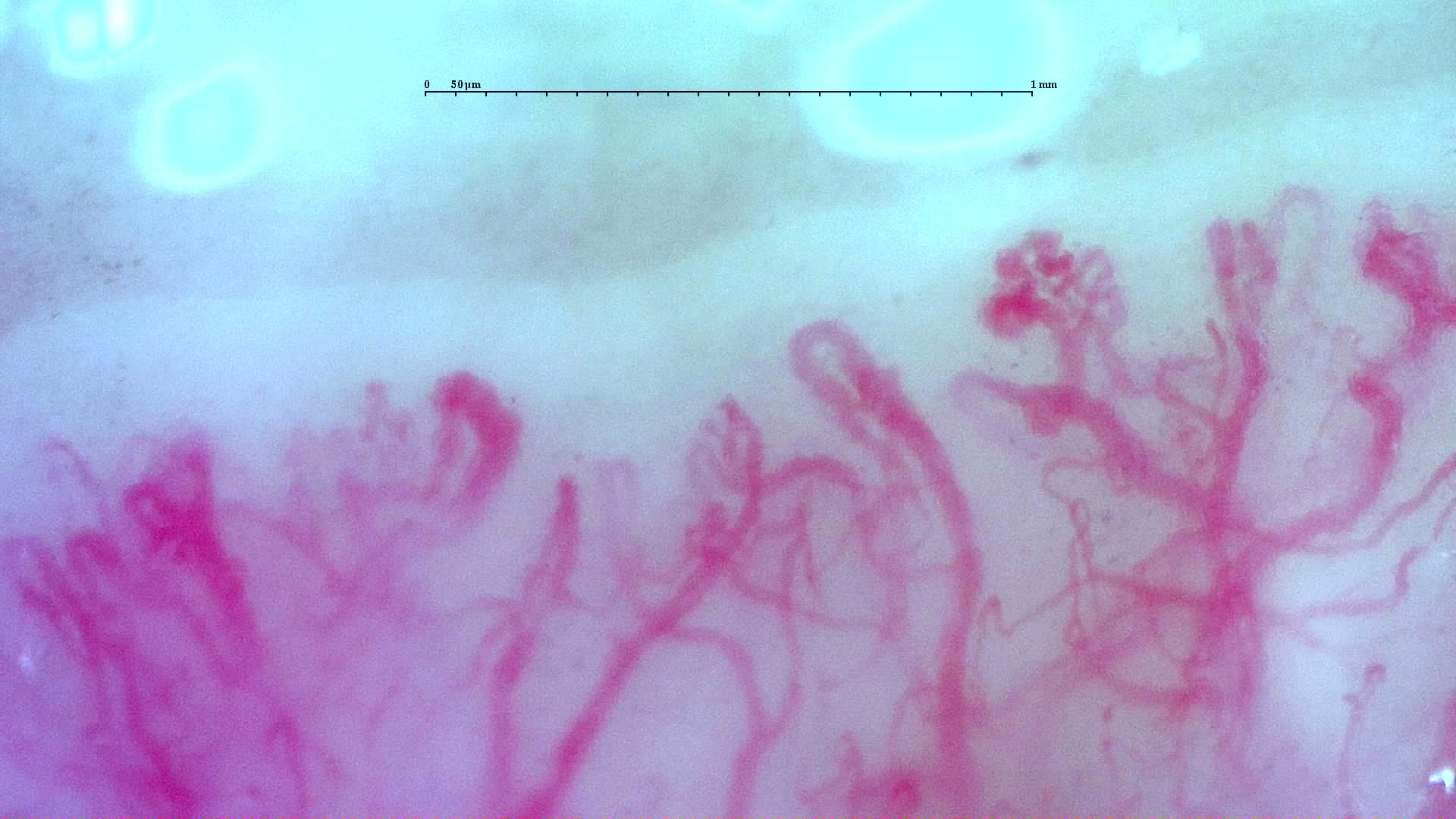
Mixed connective tissue disease: irregular branching forms
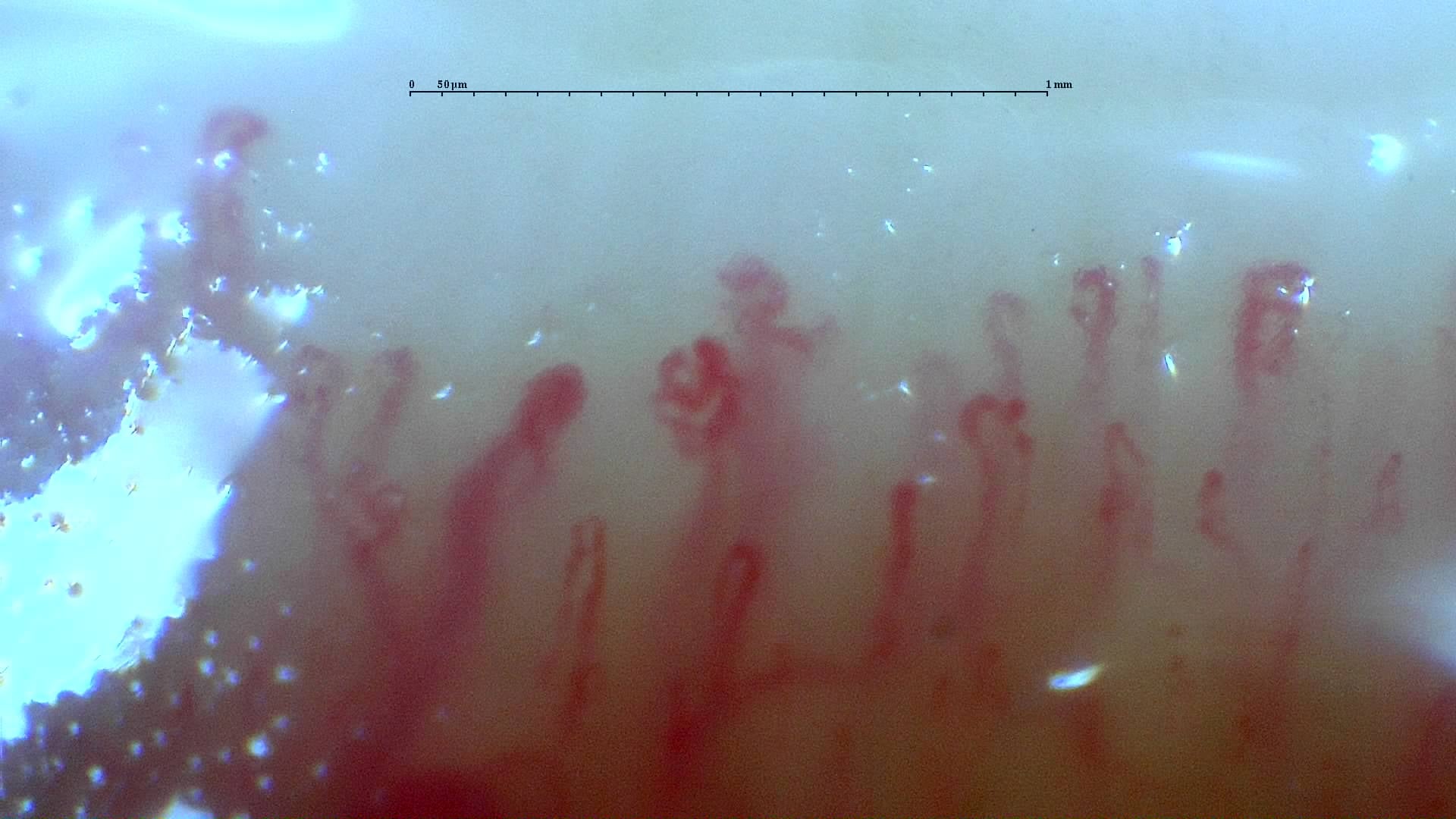
Irregular and branching forms in the anti-RNP-positive mixed connective tissue disease case. The source report describes a scleroderma-like pattern without an assignable Cutolo subtype.
Source study context
Capillaroscopy shows megacapillaries, but their distribution does not fit the typical organization of any early, active, or late Cutolo subtype. The overall morphology is therefore classified as a scleroderma-like pattern. Arborizing capillaries are also evident. The quantitative dataset reports a mean capillary density of 5.69/mm, enlarged capillaries in 78.7%, megacapillaries in 6.0%, and ramified forms in 4.7%.
Measurements and classification refer to the described study or visit; they are not new measurements of this image.
View the complete case and studyImage details
- Pathology
- Mixed Connective Tissue Disease (anti-RNP+)
- Pattern
- Scleroderma-Like Pattern (Unclassifiable Cutolo Subtype)
- Severity
- See complete study
- Author or contributor
- Miguel Antonio Mesa Navas
- Hallmarks
- Abnormal shapes and ramifications
Teaching point
Irregular and branching forms in the anti-RNP-positive mixed connective tissue disease case. The source report describes a scleroderma-like pattern without an assignable Cutolo subtype.
Clinical caveat
This image illustrates a visual finding and should be interpreted with acquisition quality, distribution across fingers, clinical context, and serology when relevant.
Use and licensing
Educational material. For reuse outside Capillaroscopy.com, request permission and preserve the stated attribution.